DOOH Verification 101: It’s time to harness third-party verification to elevate DOOH campaign reporting
The importance of in-flight or post-campaign reporting in DOOH cannot be underestimated.
On a basic level, they provide agencies and advertisers with the information they need to evaluate the success of their DOOH ads.
But their role goes beyond just validating outcomes. In-flight and post-campaign reports play a viable role in offering reassurance that budgets have been spent effectively, and are powerful levers for informed decision making, future planning and the optimisation of DOOH campaigns.
However, their efficacy hinges on the use of accurate DOOH campaign performance data.
This is where the use of third-party verification (TPV) platforms, like UniLIVE, is not only beneficial, but essential.
In our previous post – DOOH Verification 101: Why third-party verification (TPV) has become essential in the DOOH industry? – we outlined how TPV verifies every ad play, on every screen, at every location, for the duration of a DOOH campaign.
This accurate and impartial performance data offers full transparency, showing that what was paid for, was actually delivered and when. It helps agencies to confidently report on delivery, optimise in-flight when needed and deliver accurate and truthful post-campaign reports.
But with the scale and complexity of today’s DOOH campaigns, the data burden is growing.
The impact of this for agency teams cannot be overlooked – with data aggregation, analysis and creation of campaign reports becoming a time consuming process.
To put it into perspective, a DOOH campaign with just 50 frames running over four weeks can generate up to half a million data points – that’s just for one client / one campaign. Each week, a media buying team could have over 170 campaigns live (more than 9,000 campaigns a year), and the scale becomes clear.
And let’s not forget that vast datasets, across networks, geographies and timeframes across multiple campaigns are being generated. Additionally an agency could receive this vast amount of play data from multiple vendors in inconsistent formats, creating a major operational challenge.
Which is why the role of TPV in campaign reporting goes further than the data it provides.
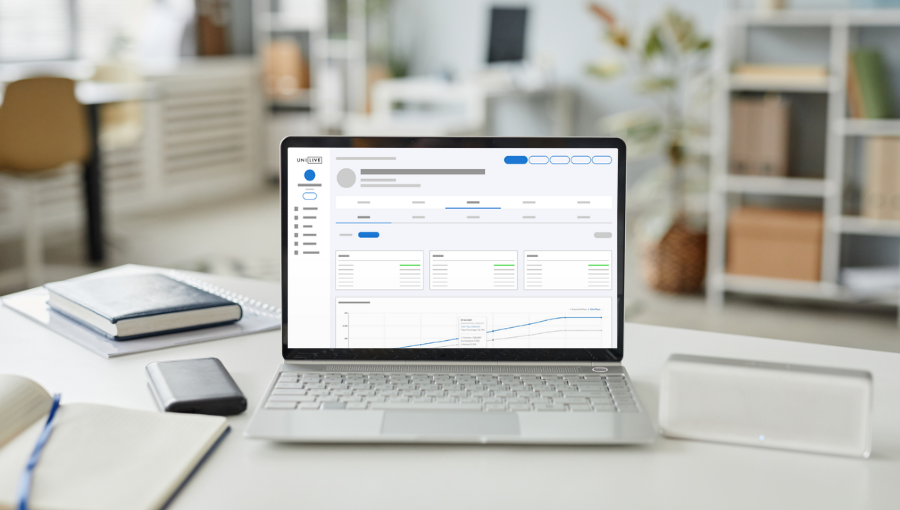
Platforms such as UniLIVE are helping to reduce manual workloads by automating the most painful campaign reporting tasks – from inflight tracking and performance checks to post-campaign analysis reports.
Firstly, there’s the collection of the data. With a verification platform, such as UniLIVE, all delivery data is centralised. Its dashboards eliminate back-and-forth with media partners or stitching playout logs together to understand how a DOOH campaign has performed. What’s more, if under-delivery is detected, it’s flagged so agencies can take action.
Reports can be created by the agency at the touch of a button – both post-campaign and while the campaign is in-flight. This gives the agency teams the ability to monitor delivery, spot issues early and provide clients with up-to-date performance insights at any stage of the campaign.
These bespoke reports are visual and translate large datasets into easily digestible insights, meaning data can be interpreted quickly and the advertiser can understand the true performance of their DOOH campaign across a range of metrics.
For agencies responsible for ensuring the effective performance of DOOH campaigns the implementation of TPV – such as UniLIVE – has become salient in the elevation of campaign reporting.
Not only is it helping agencies to communicate the effectiveness of DOOH campaigns – and prove the media channel’s worth – it dramatically increases efficiency. In fact, it’s estimated that UniLIVE can save planners up to 4 hours per campaign. That’s around 680 hours or over 90 days per year (based on the data above).
Rather than wrangling with spreadsheets, trying to simplify data, and building reporting decks, this invaluable time and resource can instead be focused on strategy, planning and future campaign optimisation.
Comments are closed